

Share Your Details
Who Can Benefit From RIC Hearing Aids?
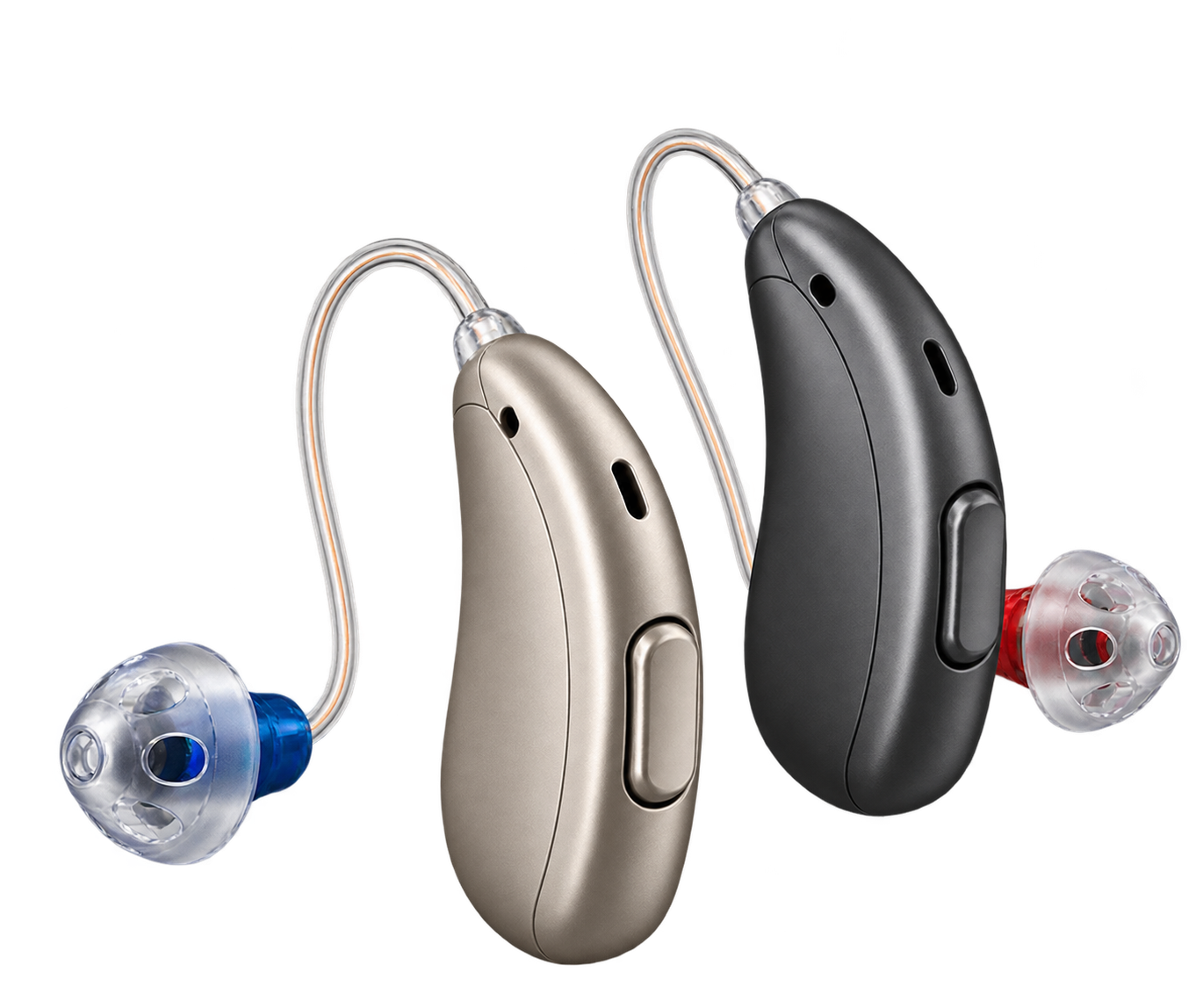
Receiver-in-Canal (RIC) hearing aids are widely recognized as the gold standard for natural sound quality and open-fit comfort. Discover if a modern RIC solution matches your lifestyle and specific auditory needs.
Mild Hearing Loss
Perfect for early-stage challenges. Gently boosts high-frequency sounds while keeping natural ambient acoustics unblocked.
Moderate Hearing Loss
Highly versatile at targeted mid-to-high frequency compensation. Restores missing details in speech and digital media with clarity.
Some Severe Cases
With professional high-output custom receivers, RIC devices comfortably support substantial, advanced-stage high-frequency loss.
Speech Understanding
Designed to separate speech from general environment sounds, allowing you to clearly follow voices and intricate conversations.
Noisy Environments
Directional dual-microphones isolate active front-facing voices while suppressing overwhelming ambient noise background levels.
*Please Note: While RIC instruments are highly dynamic and popular, a professional clinical audiogram is essential. A diagnostic evaluation remains the only way to accurately map your physiological profile to the correct device.
Get Your Hearing TestedEXCLUSIVE CLINICAL ASSESSMENT
Not Sure Which Hearing Aid Is Right for You?
Selecting a hearing aid is a deeply personal journey. Our certified clinical audiologists are here to guide you with a comprehensive hearing assessment, mapping your unique hearing profile to find the absolute perfect fit for your lifestyle and budget.
RIC vs BTE vs ITE Hearing Aids
Compare the core designs, configurations, and key features of modern hearing technology to determine which style best aligns with your personal comfort and lifestyle needs.
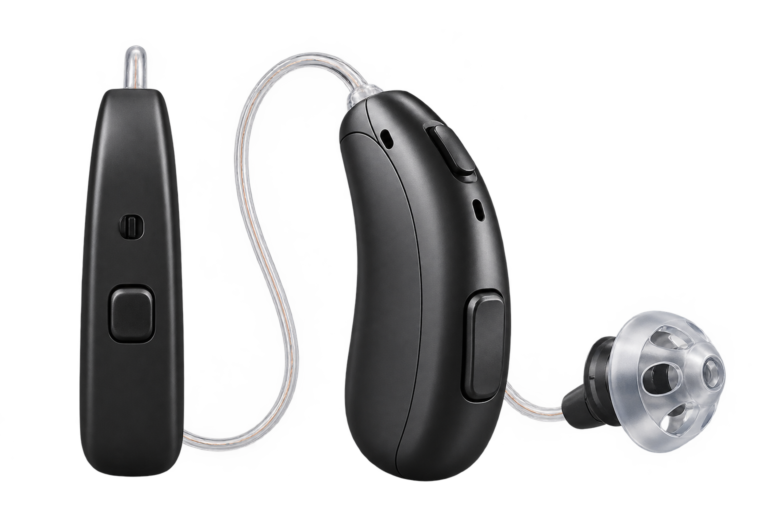
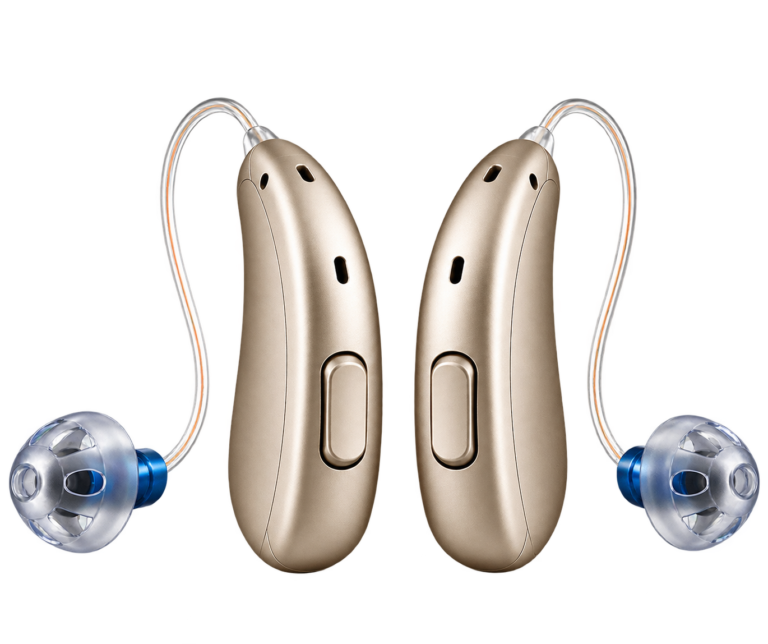
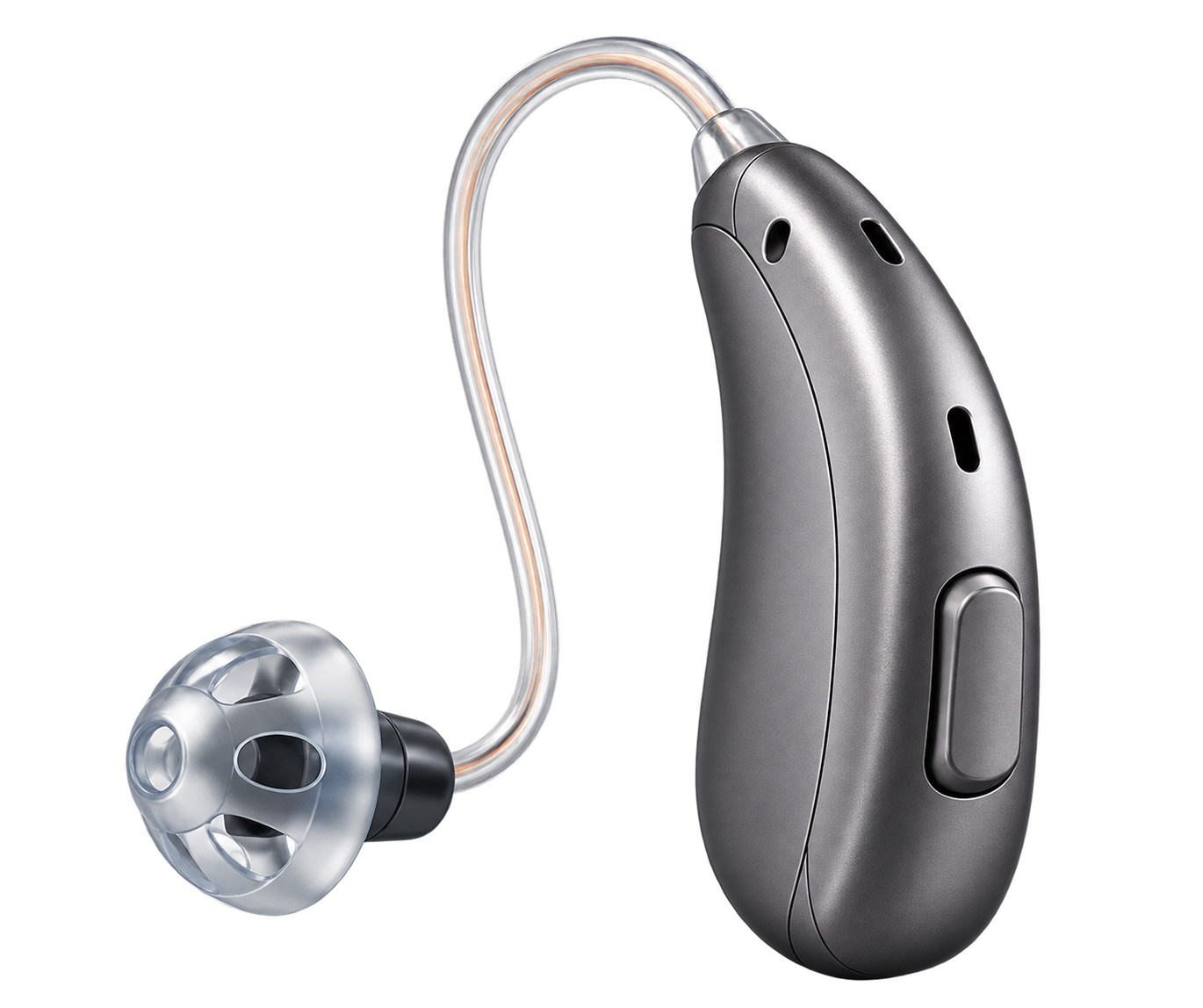
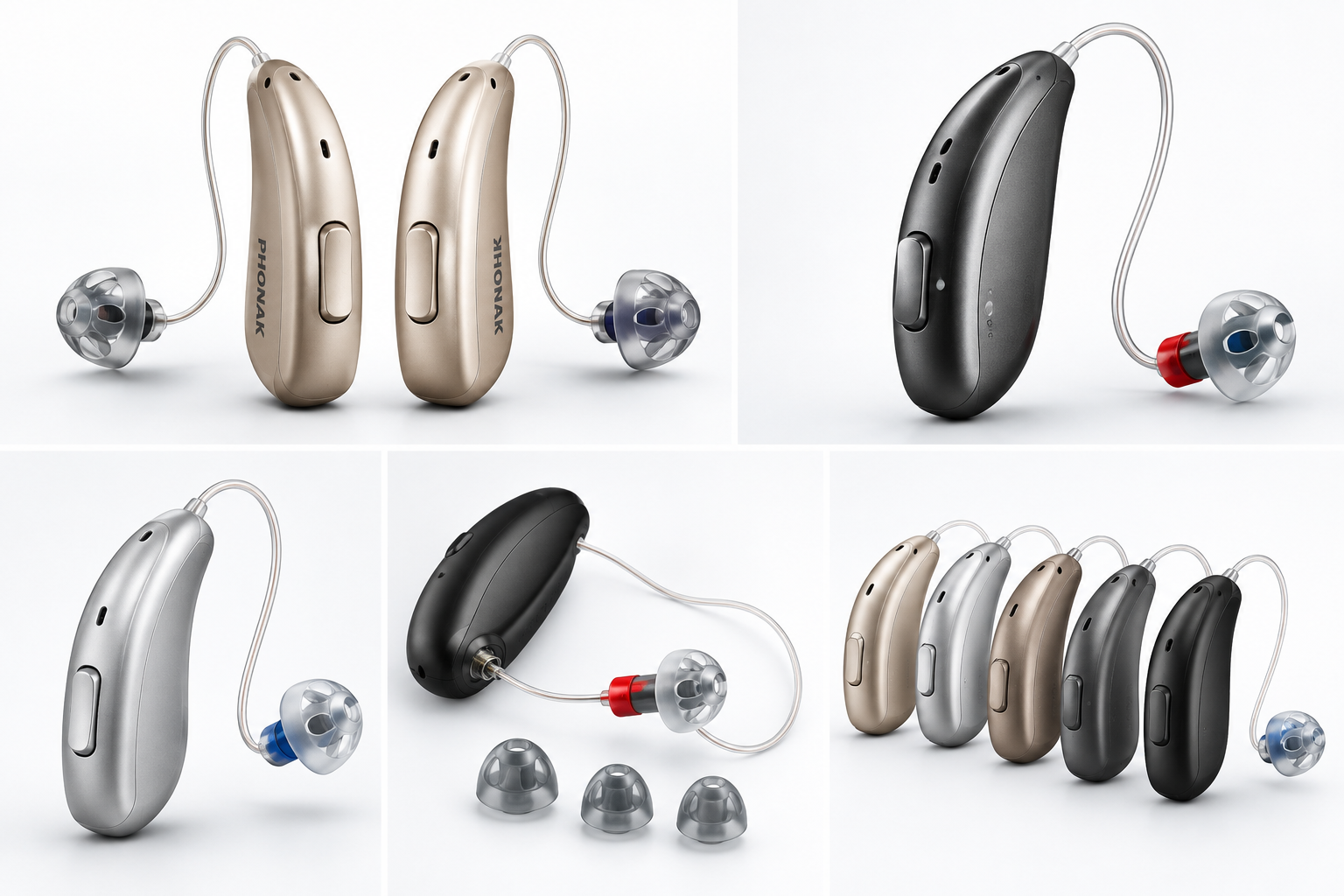
RIC (Receiver-In-Canal)
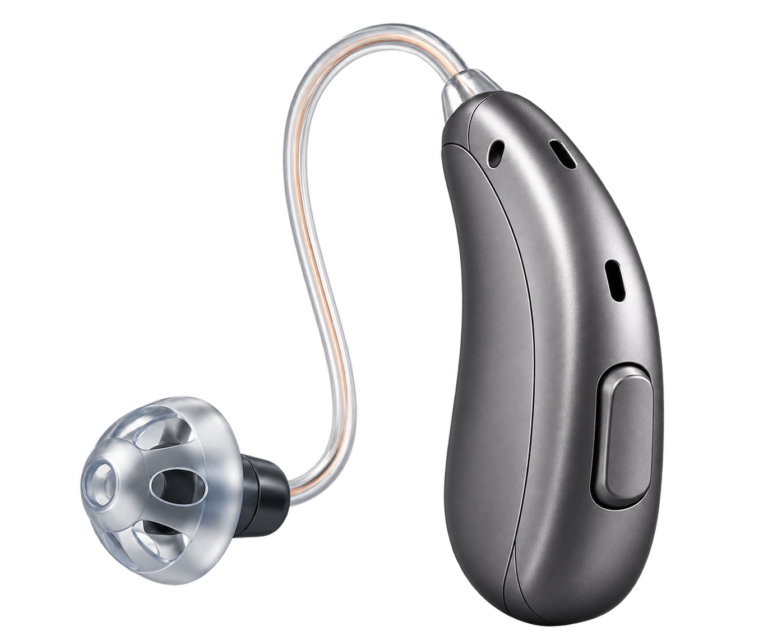
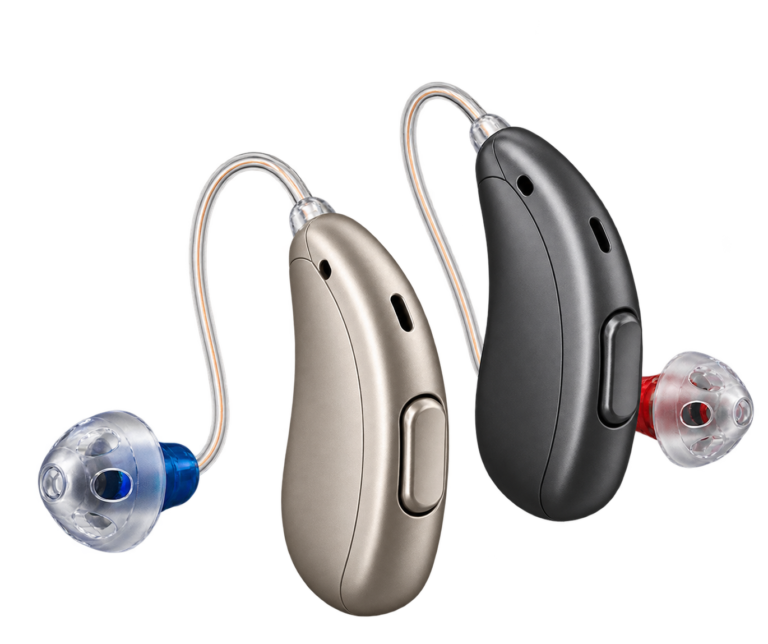
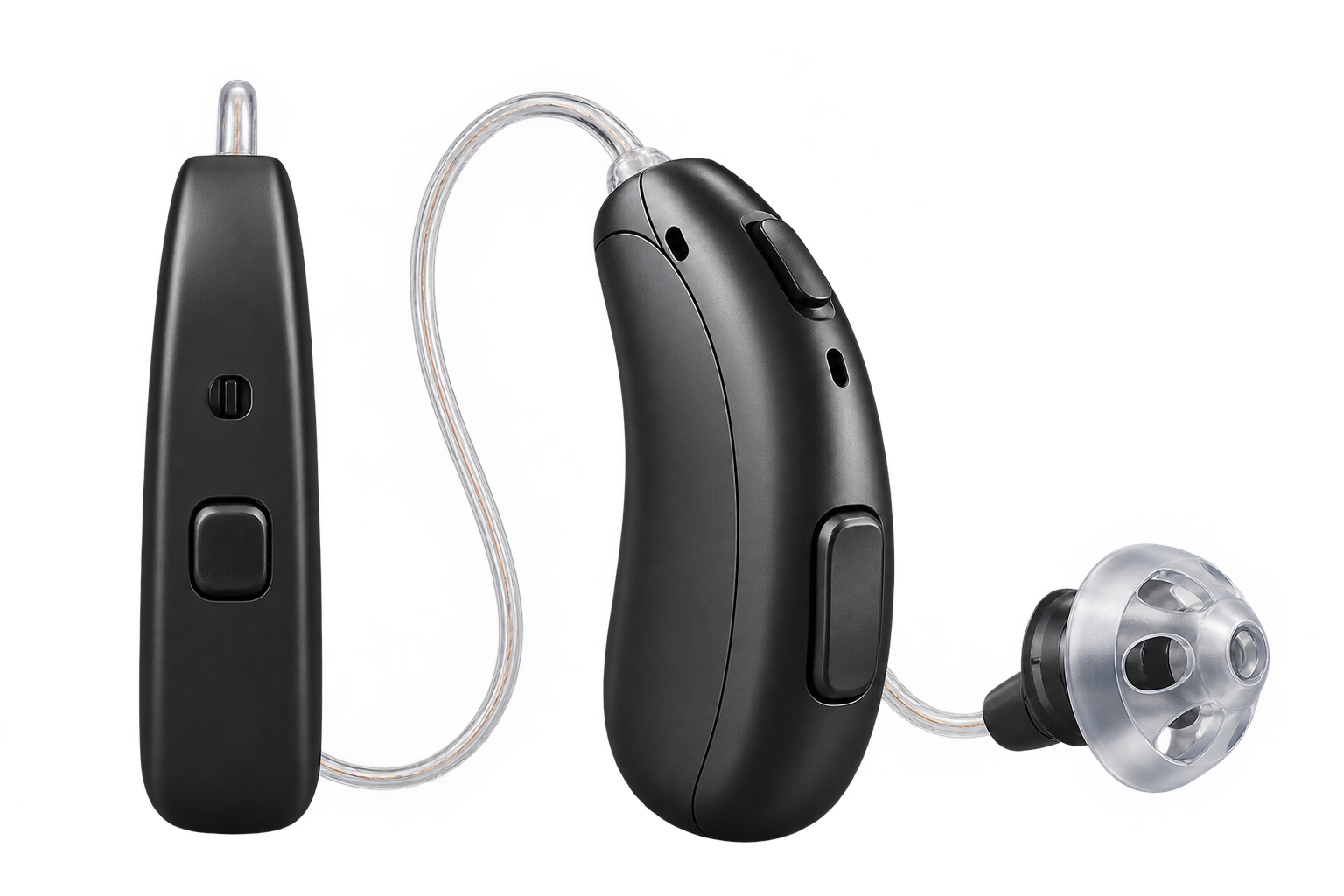
Design: Sleek device casing sits behind the ear, while an ultra-thin, nearly invisible wire delivers sound directly into the ear canal.
Receiver Position: Placed cleanly inside the ear canal, allowing for highly natural and clear acoustics.
Visibility: Extremely discreet. The primary wire is transparent, and the small body sits subtly behind the ear cartilage.
Comfort: Highly comfortable. Uses an 'open-fit' configuration that keeps the ear canal well-ventilated, avoiding a plugged feeling.
Connectivity: Exceptional. Standard across almost all models, featuring universal direct Bluetooth streaming for iOS and Android.
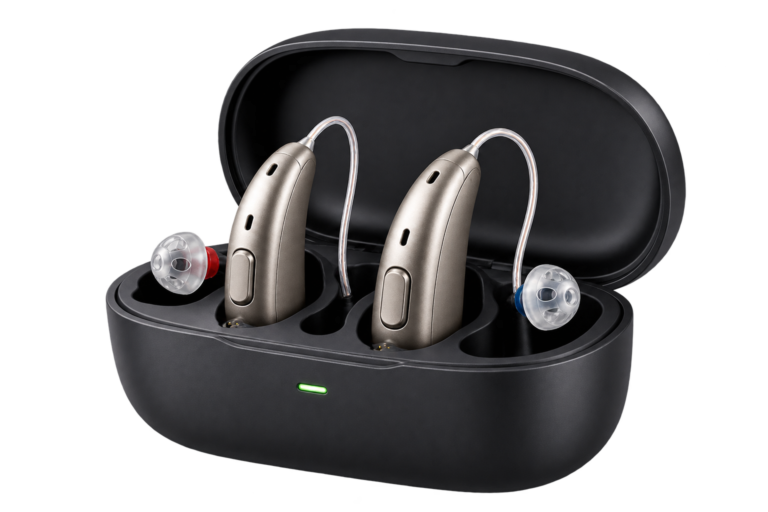
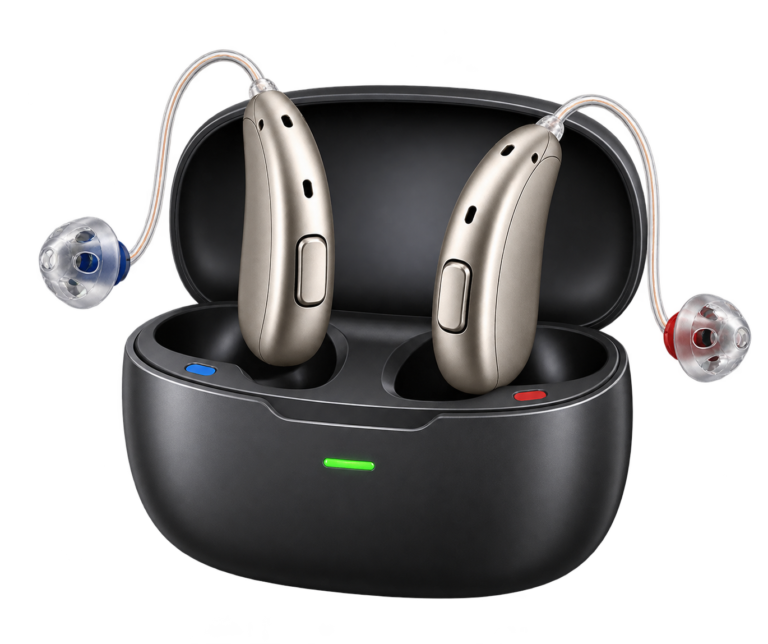
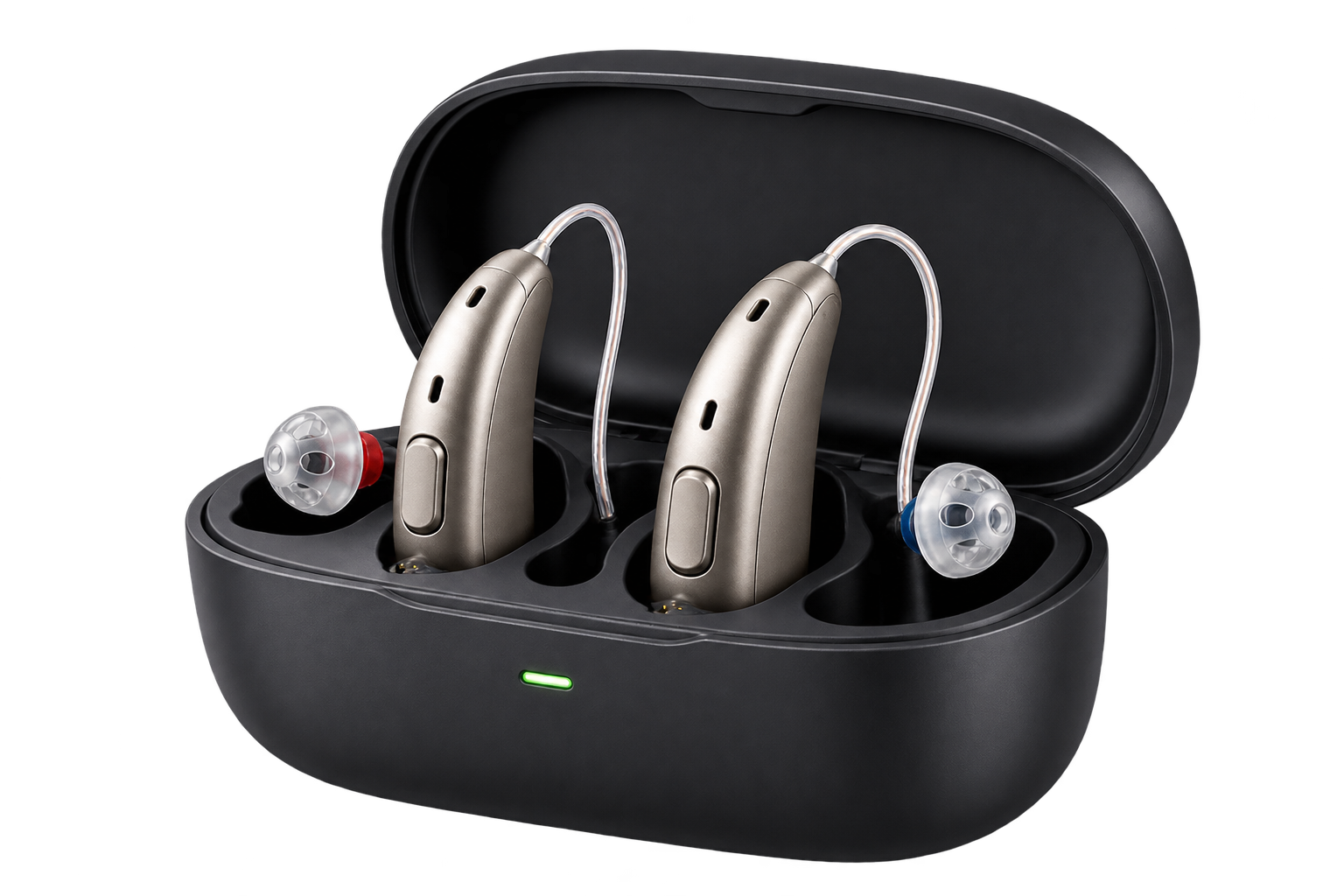
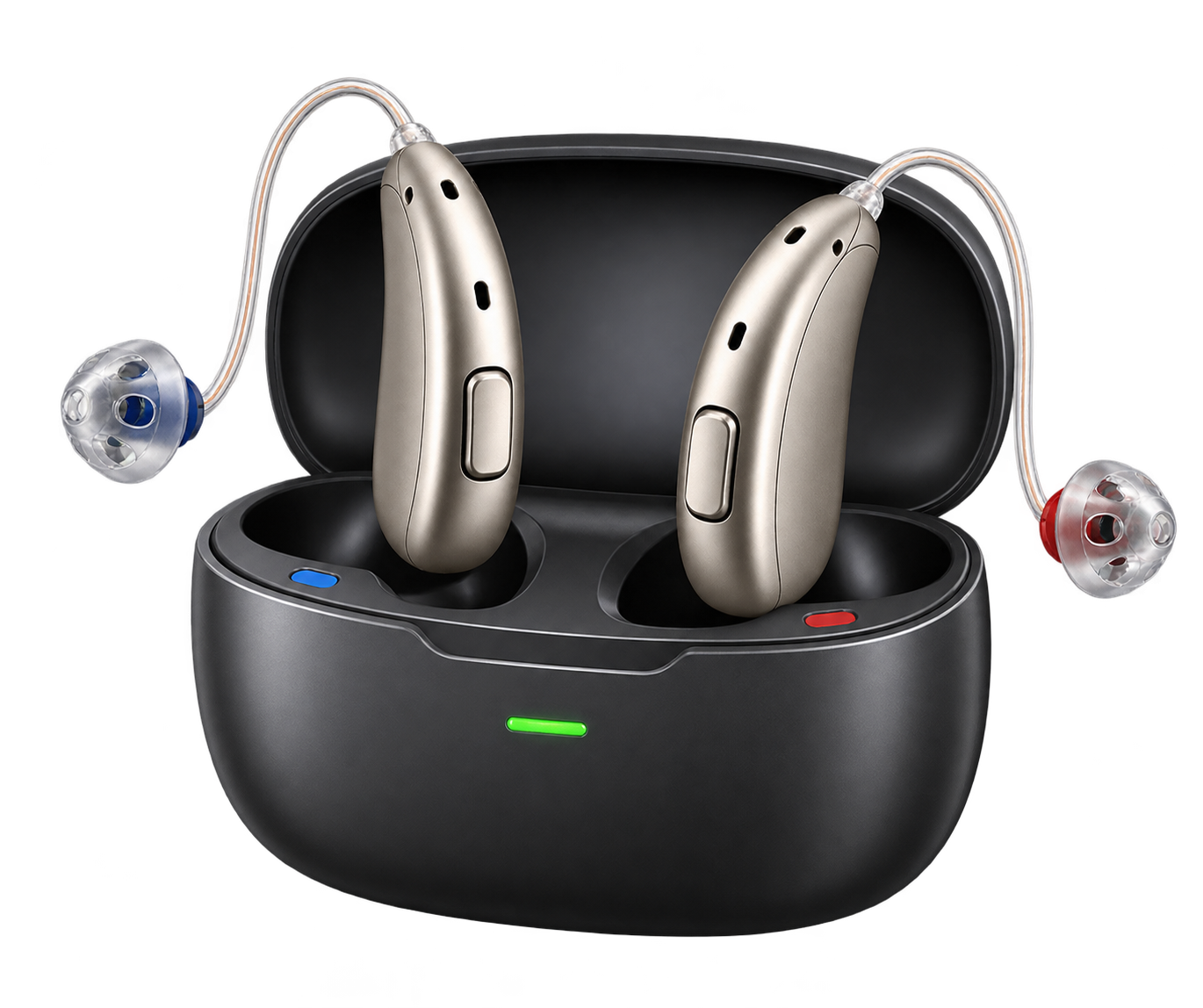
Rechargeability: Widely available. Nearly all modern premium and mid-tier models offer integrated lithium-ion charging cases.
BTE (Behind-The-Ear)
Design: Robust, durable casing rests behind the ear, channeling amplified audio into the canal through a custom-molded silicone tube.
Receiver Position: Positioned safely within the main housing body seated behind the ear, isolated from wax and moisture.
Visibility: More visible than RIC. Standard tubing is transparent, but the behind-ear casing is slightly larger to handle high amplification.
Comfort: Highly secure and tactile. Earmolds are fully customized to the user's anatomy, providing standard stability for severe loss.
Connectivity: Excellent. Equipped with larger, robust internal antennas that maintain reliable long-range Bluetooth connections.
Rechargeability: Readily available. High-capacity rechargeable cells are standard in most modern designs, offering long-lasting power.
ITE (In-The-Ear)
Design: A custom-scanned, single-piece device that fills the outer ear bowl or sits deeper in the ear canal without an external wire.
Receiver Position: Contained entirely within the custom outer shell of the device in the ear.
Visibility: Highly visible or fully custom-molded to blend with skin tones. Smaller versions (CIC or IIC) can be virtually hidden.
Comfort: Highly personalized. Molded precisely to your ear's unique physical shape, though some users report a partial blocked feeling.
Connectivity: Good. Available in half-shell or full-shell models, though tiny micro-canal models often bypass Bluetooth.
Rechargeability: Selective. Custom rechargeable shells are available, while the smallest models still utilize traditional hearing aid batteries.
Which hearing aid is right for you?
Selecting the correct style involves evaluating your clinical hearing profile, daily habits, and anatomical comfort. Our expert audiologists are here to guide you toward a tailored, personalized match.
Book a Hearing TestFrequently Asked Questions About RIC Hearing Aids
Get scientifically backed, clinically accurate answers regarding Receiver-in-Canal technology to make an informed decision for your long-term hearing wellness.
How to Take Care of Your RIC Hearing Aids
Receiver-in-Canal (RIC) devices are powerful, micro-engineered instruments. Daily cleaning and proper handling protect your investment and maintain acoustic precision.
1. Keep Clean
Wipe your hearing aids daily with a soft, completely dry cloth. Never use water, chemical solvents, or household cleaning liquids on the shell.
2. Protect from Moisture
Remove your devices prior to showering, swimming, or heavy rain. Avoid keeping them in damp spaces like bathrooms and consider using a dedicated dry-box.
3. Clean Receiver/Dome
The soft silicone dome inside your ear collects earwax. Gently brush the receiver dome with a clean tool to prevent blockages that can distort audio output.
4. Replace Wax Filters
Change the tiny white wax filter at the tip of the receiver regularly. Replace it immediately if the sound feels weak or if you observe visible blockage.
5. Charge & Store Properly
Dock rechargeable units nightly to maintain battery cell health. If utilizing traditional batteries, open doors fully when inactive to air out internal elements.
6. Professional Servicing
Schedule deep cleans and clinical maintenance every six months with your audiologist. This helps test internal electronic components for high-level function.
Visit CareSpeech & Hearing Clinic
CareSpeech & Hearing Clinic
YOUR ROADMAP TO CLARITY
Your RIC Hearing Aid Journey
Embark on a personalized five-step clinical path engineered to restore dynamic hearing, ensure physical comfort, and seamlessly integrate premium sound into your daily life.
Step 1: Diagnostic Hearing Assessment
Your journey begins with an advanced audiological evaluation. We map your dynamic range, speech clarity, and sensory tolerances in a state-of-the-art acoustic environment.
Step 2: Personalized Recommendation
Based on your unique audiological data and lifestyle needs, our specialists recommend the optimal Receiver-In-Canal (RIC) device with custom physical configurations.
Step 3: Precision Fitting & Programming
Using Real-Ear Measurements (REM), we program your RIC devices to match exact prescriptive audiological standards, assuring perfectly calibrated sound output.
Step 4: Custom Personalisation
We sync your hearing aids with your daily environments—setting up Bluetooth streaming, custom sound profiles, smartphone controls, and background-noise filters.
Step 5: Dedicated Follow-Up Care
Adaptive hearing takes time. We stand by you with structured follow-up visits, real-world adaptation fine-tuning, and lifetime device maintenance support.
How Does a RIC Hearing Aid Work?
Understand the sophisticated engineering behind Receiver-in-Canal technology in four simple stages.
1. Microphone
Captures ambient environmental sounds with pinpoint accuracy and instantly translates them into digital signals.
2. Sound Processing
Routes signals through customized algorithms, actively filtering feedback and amplifying critical speech frequencies.
3. Receiver
Sends targeted acoustic signals through an ultra-fine wire directly to the receiver located safely in your ear canal.
4. Clearer Sound
Delivers perfectly matched, high-clarity sound matched to your personal audiologist-programmed profile.
What Our Patients Say
Discover how clinical excellence and personalized hearing care have transformed daily lives and reconnected families.