
Welcome to Care Speech & Hearing Clinic, Railway Station Road, Near Sitapur Eye Hospital, Lanka, Ghazipur (UP) Center
Welcome to Care Speech & Hearing Clinic, Lanka, Railway Station Road, Ghazipur (UP) 233001
Book Your Hearing Test. Our hearing care experts are ready to help you. Fill in your details and we’ll reach out within 24 hours.

Share Your Details

We’ll get back to you soon

Contact Form Demo

What Is a Hearing Test?
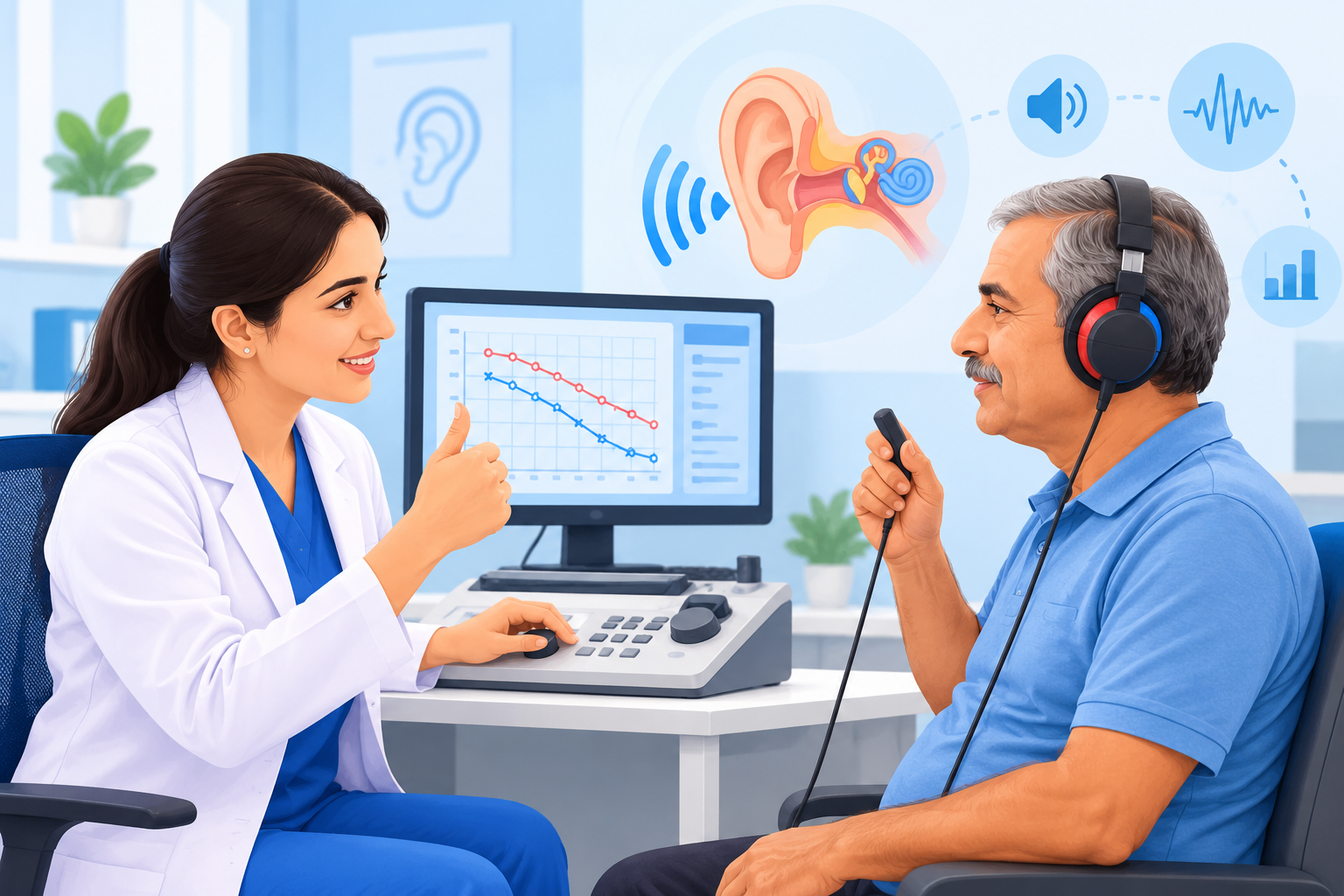
A hearing test is a professional assessment used to understand how well a person can hear different sounds and frequencies. Conducted by a certified specialist, this quick, comfortable evaluation identifies potential hearing difficulties, assesses their extent, and shapes tailored care plans designed to reconnect you to the conversations and environments you love.

Different hearing tests assess different aspects of hearing and ear function, ensuring a precise and fully custom baseline of your auditory health.

Why Should You Get Your Hearing Tested?

Recognizing early indicators and understanding common concerns is key to sustaining lifelong cognitive health and wellness.

Difficulty Hearing

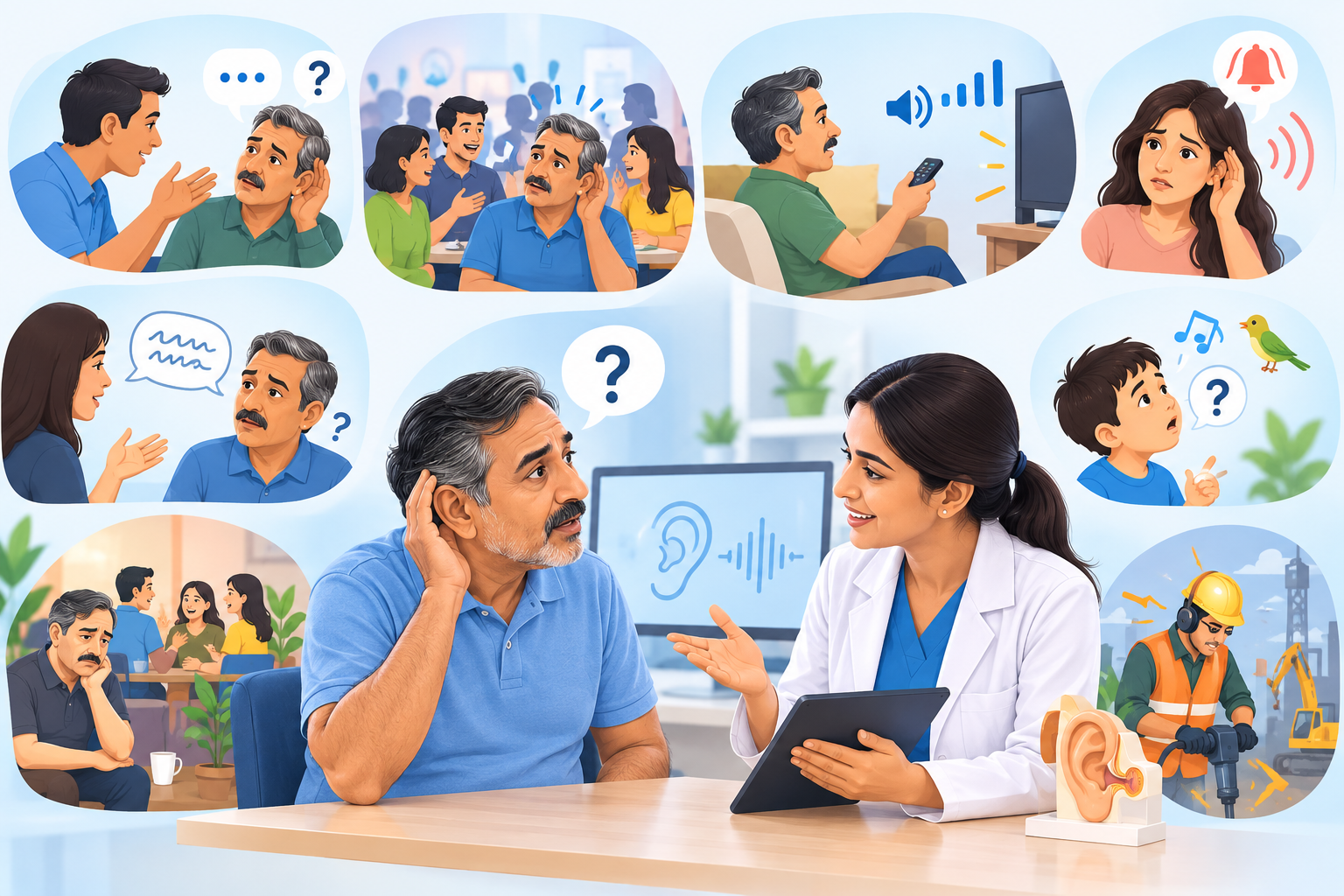
Regularly asking others to repeat themselves, particularly in noisy environments or social gatherings.

Speech Understanding

Feeling as though others are constantly mumbling or experiencing trouble distinguishing specific consonants.

Frequently Increasing Volume

Needing the television, computer, or music system at a volume level that others find uncomfortably loud.

Difficulty Hearing Certain Sounds

Struggling to hear higher frequencies like high-pitched voices, device alarms, doorbells, or birds chirping.

Children's Hearing Concerns

Monitoring developmental milestones, speech clarity, or assessing sudden changes in school concentration.

Changes in Hearing

Experiencing sudden drop-offs in auditory clarity, localized fullness, or persistent ringing (tinnitus).

Types of Hearing Tests

Different hearing tests provide different information to help our specialists understand your unique auditory profile and recommend the ideal treatment plan.

COCHLEAR RESPONSE

OAE – Otoacoustic Emissions

HEARING SENSITIVITY

PTA – Pure Tone Audiometry

MIDDLE-EAR ASSESSMENT

Impedance Audiometry

NEWBORN HEARING SCREENING

OAE Hearing Test

A Simple Way to Screen Your Baby's Hearing

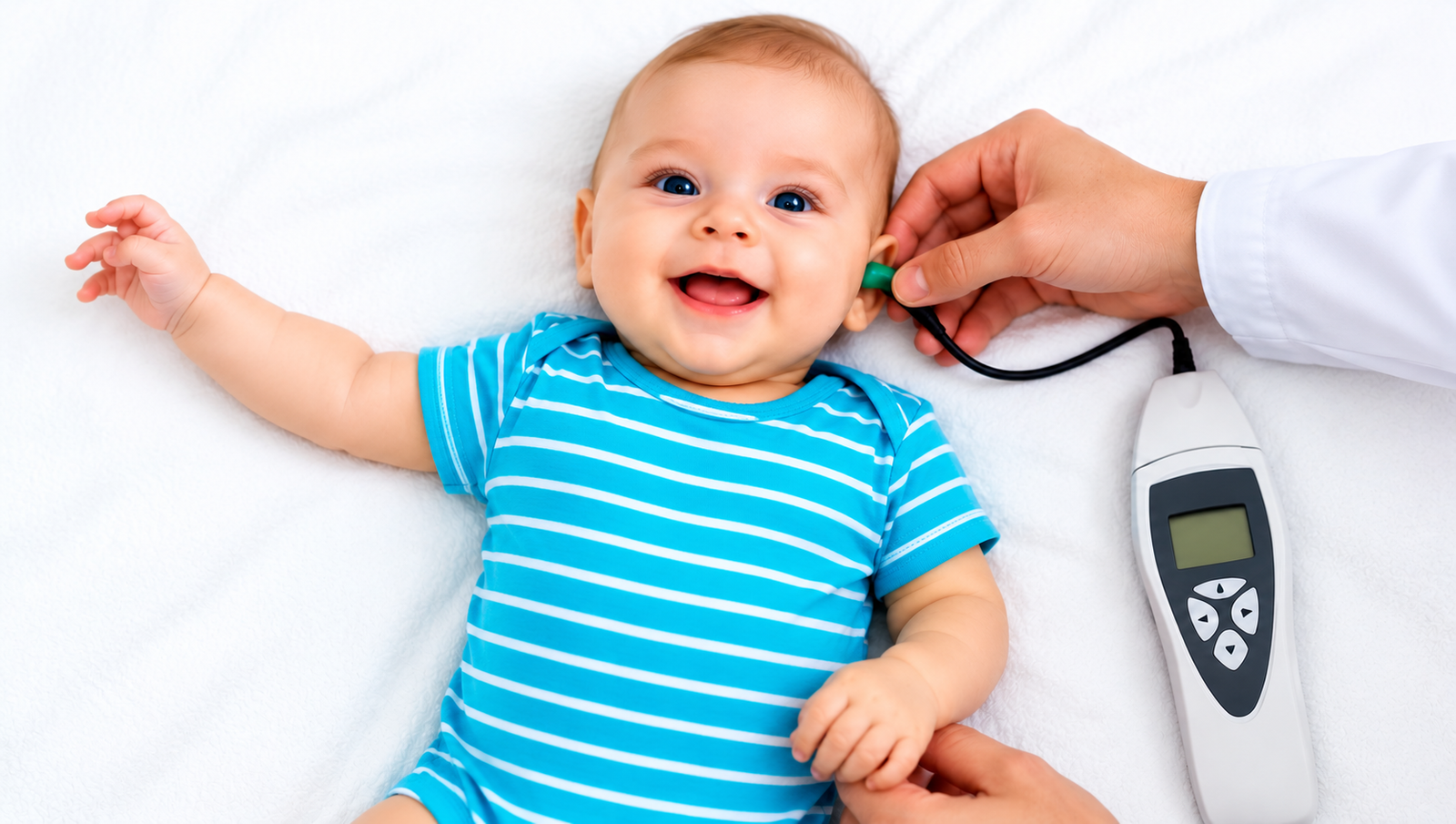
Otoacoustic Emissions (OAE) testing is a quick, painless and non-invasive hearing screening test that measures responses from the cochlea's outer hair cells. It is commonly used in newborn hearing screening.
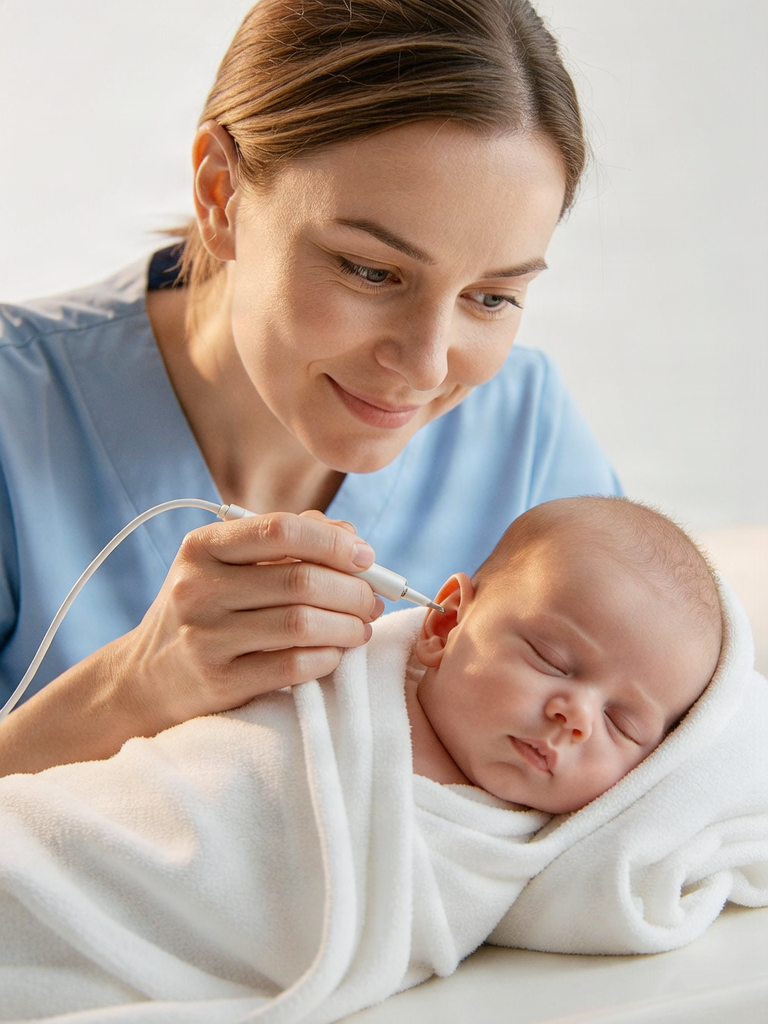
Healthcare professional performing OAE hearing screening test on a newborn baby

Why Is an OAE Test Important?

Early identification of hearing concerns can make a meaningful difference in a child's development.

Newborn Hearing Screening

OAE testing is a standard part of newborn hearing screening programmes, helping identify possible hearing concerns early in life.

Early Identification

Identifying possible hearing concerns early allows families and healthcare professionals to explore appropriate next steps in a timely manner.

Quick and Painless

The test is non-invasive, takes only a few minutes, and does not cause any discomfort to your baby.

Guidance for Parents

Results are explained clearly, and parents receive guidance on recommended follow-up steps if further evaluation is needed.

How Is the OAE Test Performed?

1

Ear Preparation

The healthcare professional checks the ear canal and selects a suitable soft probe tip for your baby.

2

Sound Stimulation

A small, soft probe is gently placed at the entrance of the ear canal and delivers quiet, gentle sounds.

3

Response Measurement

The device listens for and records the ear's natural otoacoustic responses to the sounds.

4

Results and Guidance

The professional explains the results and recommends appropriate follow-up steps if required.

Frequently Asked Questions

Answers to common questions parents ask about OAE hearing testing.

Is an OAE test painful for babies?

No. The OAE test is completely painless and non-invasive. A small, soft probe tip is gently placed at the entrance of the ear canal — nothing enters the ear canal itself. Most babies remain calm or even sleep through the test.

The actual screening typically takes just a few minutes per ear. The total appointment time may be slightly longer to allow for preparation and for the professional to explain the results to you.

A refer result means the expected otoacoustic response was not clearly detected during this screening. It does not automatically mean your baby has a permanent hearing loss. Further evaluation is recommended to understand the result more clearly.

No. OAE testing checks the function of the cochlea's outer hair cells. It may not detect all types of hearing concerns, such as auditory neuropathy spectrum disorder. Your healthcare professional can advise on additional assessments if needed.

Newborn hearing screening is ideally carried out within the first few weeks of life. If your baby has not yet had a hearing screening, speak with your healthcare provider about arranging one.

Your baby does not need to be asleep, but a calm, quiet state helps produce the most reliable results. Feeding your baby just before the appointment can help keep them settled.

Understanding Different Hearing Tests


Test Type

Mainly Assesses

Commonly Used For

Pure Tone Audiometry

Hearing sensitivity and thresholds across a range of high and low frequencies.

Identifying the overall degree, configuration, and type of hearing loss (conductive vs. sensorineural).

Speech Audiometry

Ability to hear, recognize, and repeat spoken words clearly at varying volumes.

Assessing comprehension difficulties in noisy environments and determining hearing aid candidacy.

Tympanometry

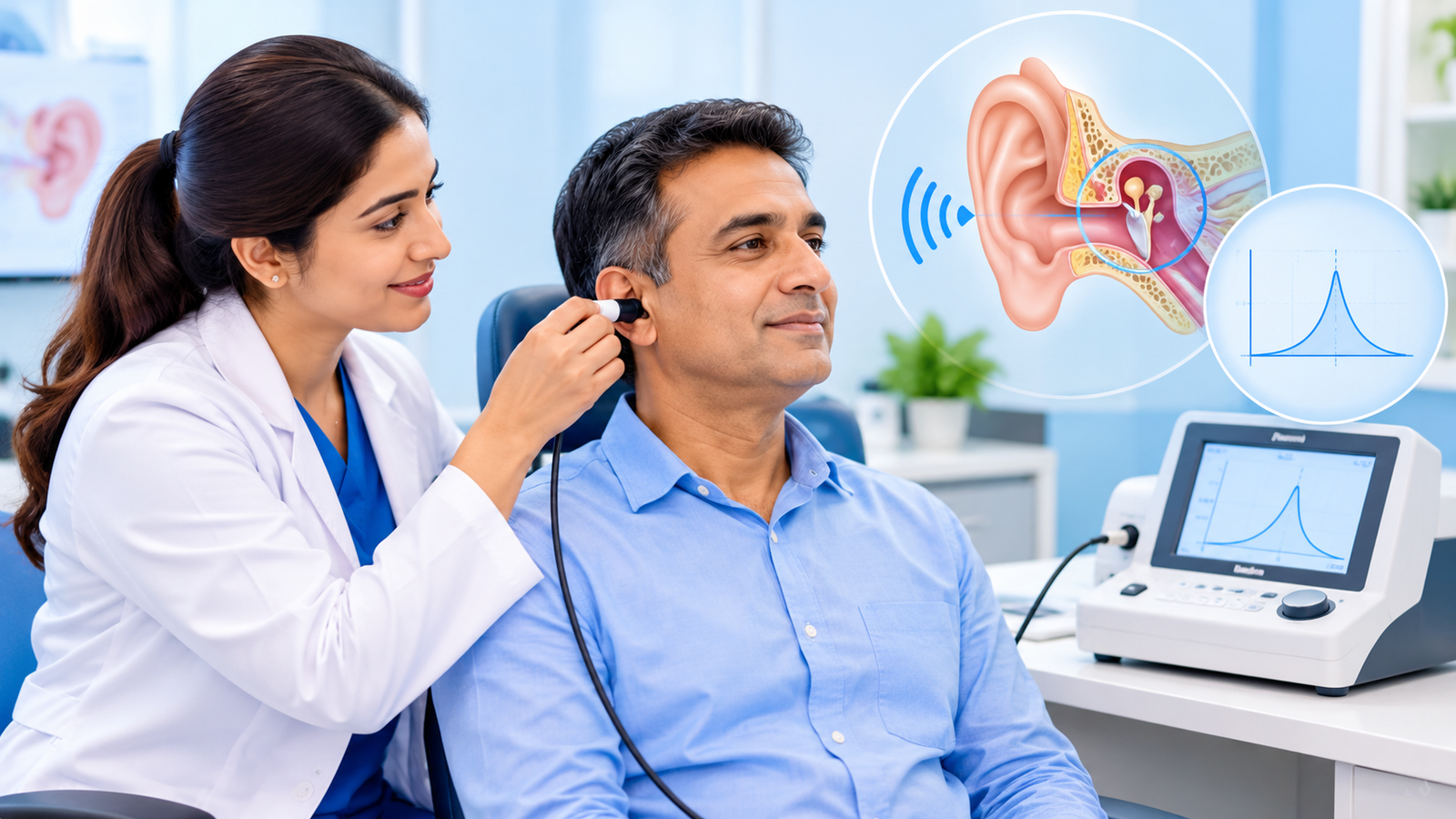
Physical health of the middle ear system, eardrum movement, and pressure.

Detecting fluid build-up, potential eardrum perforation, ear infections, or wax blockages.

Otoacoustic Emissions (OAE)

Response functions of the sensory outer hair cells within the inner ear (cochlea).

Objective testing utilized heavily in newborn screens and pediatric diagnostic assessments.

Who May Need a Hearing Test?

Book a Hearing Assessment

What Happens During a Hearing Test?

Our modern, step-by-step diagnostic evaluation is completely painless, comfortable, and tailored to mapping your precise hearing profile.

01

Initial Consultation


We discuss your personal hearing history, daily environment, and lifestyle needs to focus the test on your real-world hearing challenges.

02

Ear Examination


Using a gentle light, our audiologist inspects your ear canal and eardrum to rule out physical blockages or earwax-related hearing loss.

03

Hearing Assessment


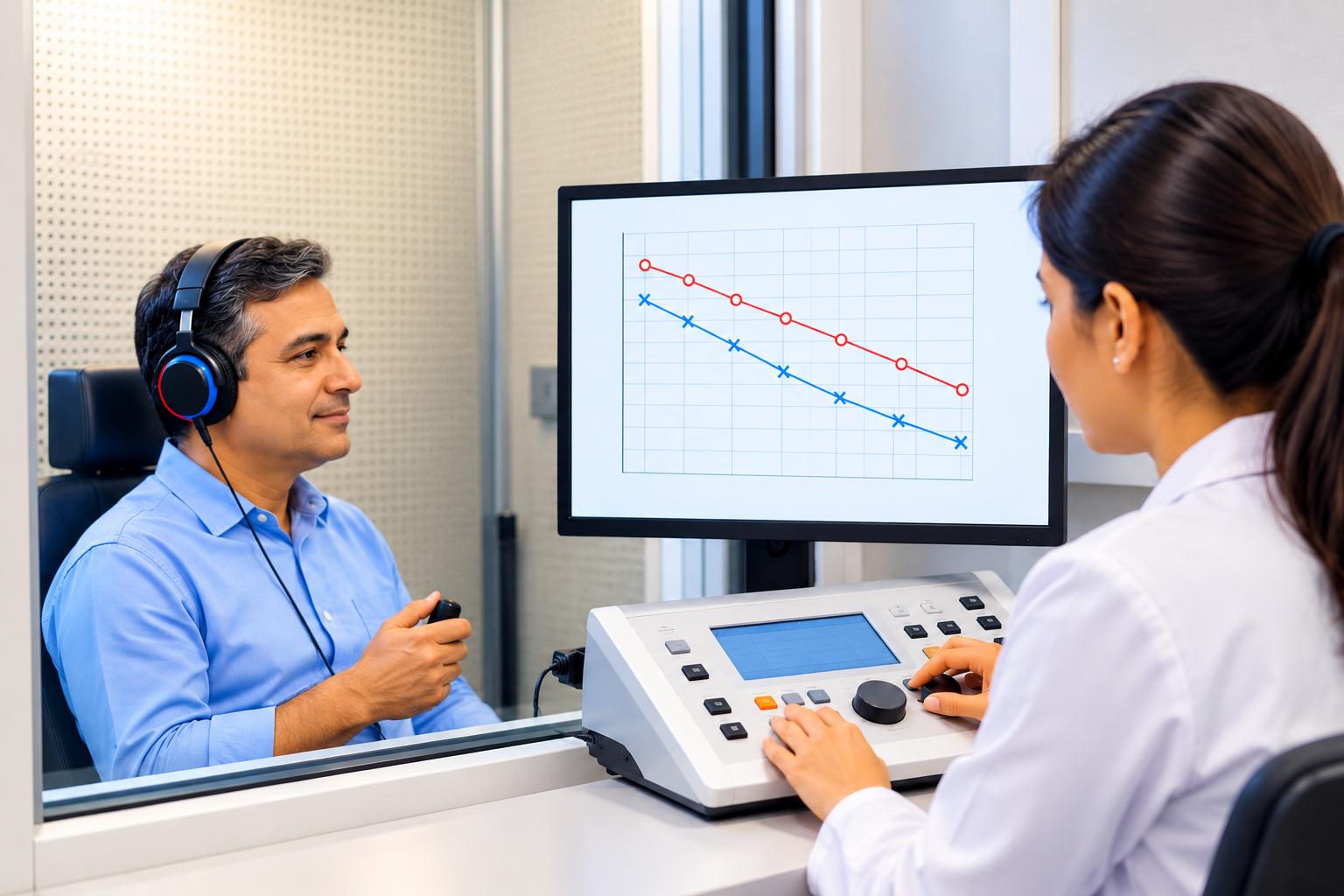
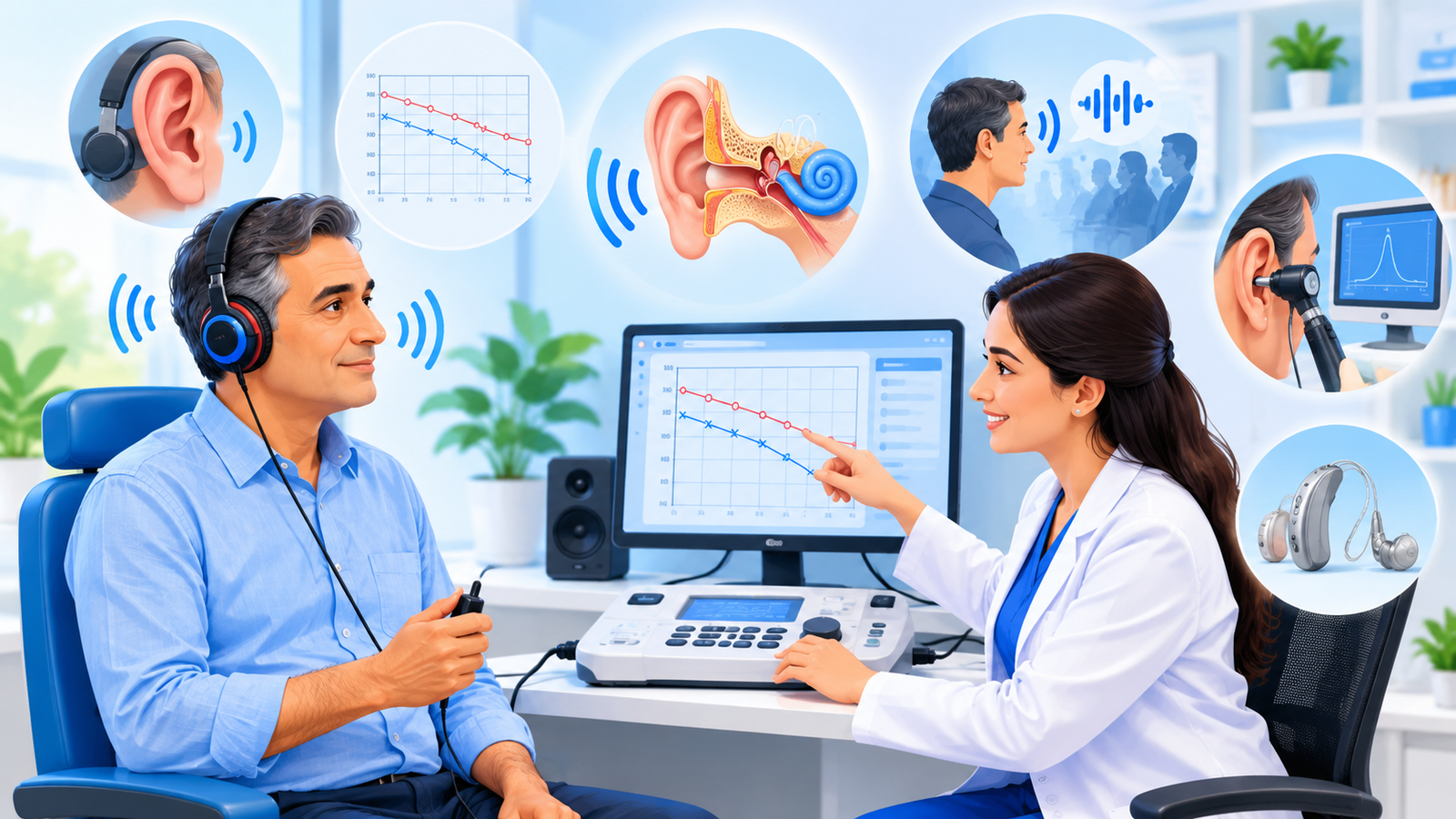
While wearing lightweight headphones, you will listen to varying tones and speech at different volumes to find your precise range of hearing.

04

Results & Guidance


You will receive an immediate audiogram with your results. We explain the findings and walk you through modern, tailored options if support is needed.

PEDIATRIC AUDIOLOGY

Friendly, Specialized Hearing Tests for Children

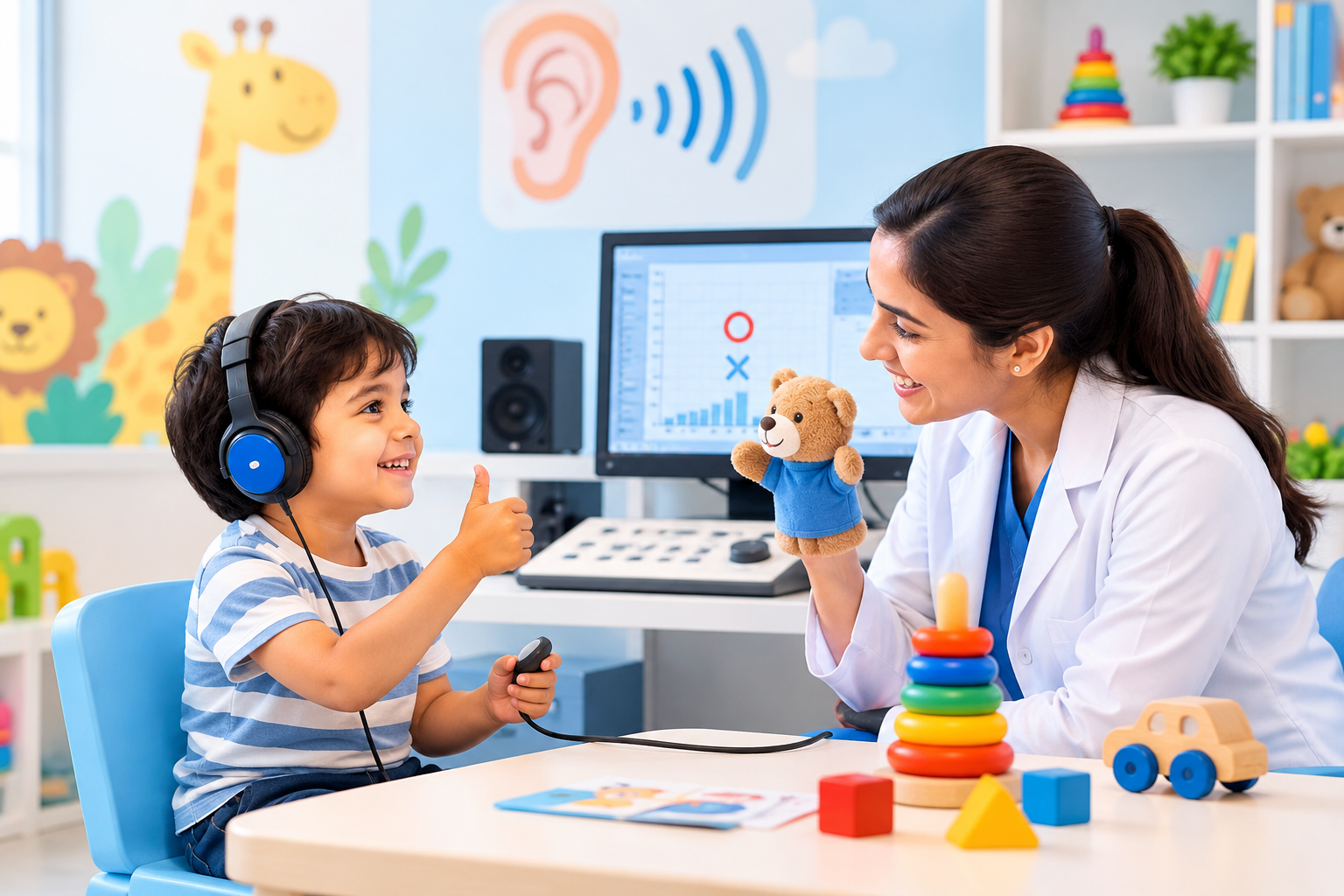
We create a warm, engaging environment where developmental milestones and hearing diagnostics feel like play. Our qualified specialists make testing completely stress-free.

Play Audiology

Fun, interactive game-style testing.

Tympanometry

Painless middle-ear fluid screening.

Early Tracking

Detect hearing delay markers early.

School Prep

Ensure classroom readiness & focus.

Expert Team

Compassionate pediatric clinical experts.

ADULT AUDIOLOGY

Comprehensive Hearing Tests for Adults

Prioritize your cognitive health and daily interactions. Our fully customized adult diagnostics pinpoint fine-grained sensitivity levels and enhance speech recognition clarity in demanding auditory settings.

Understanding Your Audiogram

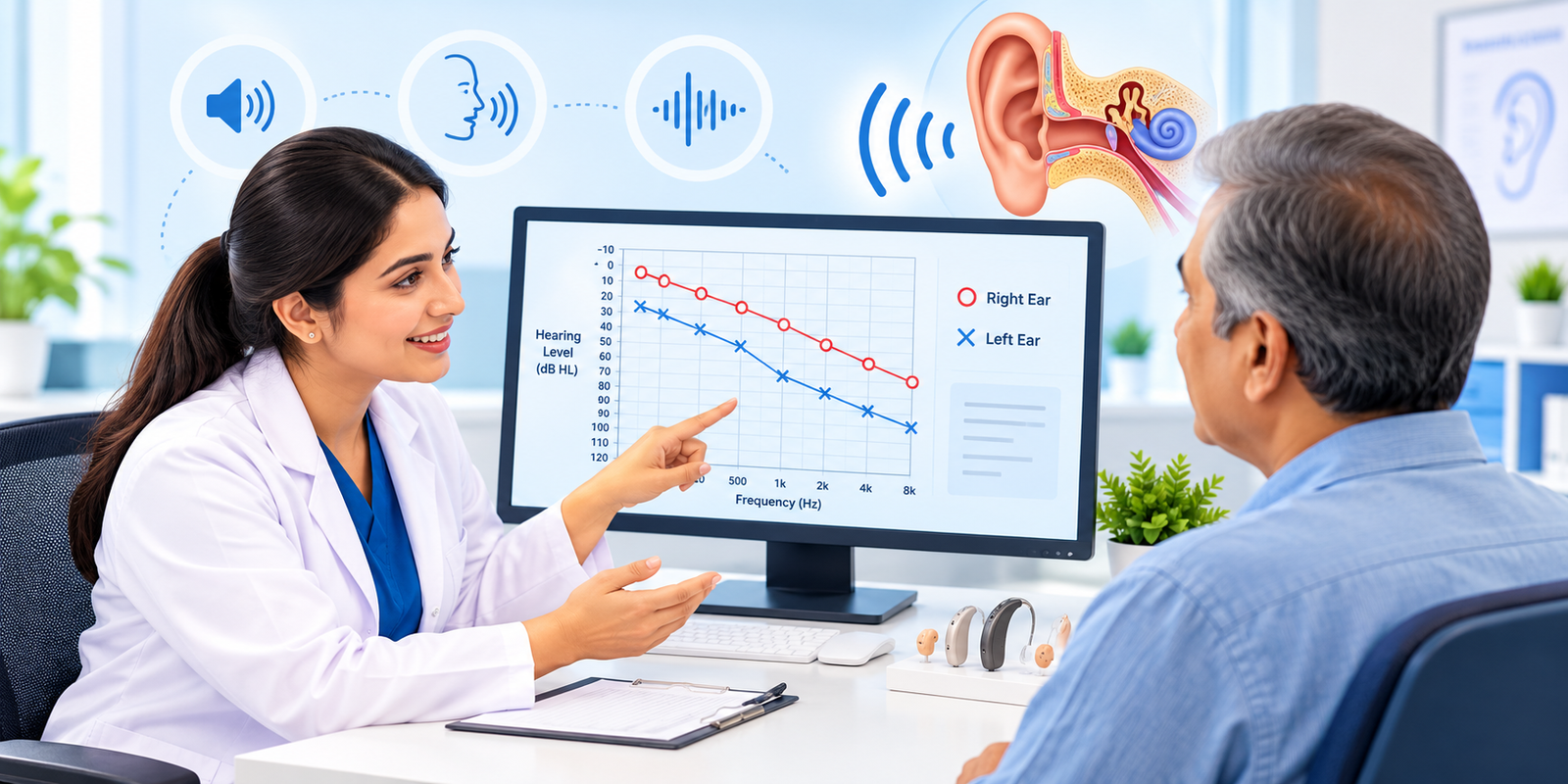
An audiogram is a graphical representation of your hearing ability, displaying the softest sounds you can hear at different frequencies and decibels. Understanding it is the first step toward customized care.

Frequency (Hz)

Measured on the horizontal axis of the graph. It represents sound pitch, running from low bass tones (e.g., 250 Hz) up to very high treble sounds (e.g., 8000 Hz). Human speech spans across these dynamic frequencies.

Hearing Level (dB HL)

Shown on the vertical axis. It measures sound intensity in decibels, from soft whispers (-10 to 15 dB) to loud ambient noise. Higher numbers indicate that louder sound levels are required for detection.

Important Note on Reading Your Chart

Each ear is represented by specific symbols on the audiogram. Your right ear results are recorded as a red circle ('O'), and your left ear results are noted as a blue cross ('X'). Always consult with a licensed professional for a full diagnostic evaluation.

Why Choose CareSpeech for Hearing Assessment?

We combine experienced, patient-first practitioners with state-of-the-art audiological environments for results you can completely trust.

Professional Hearing Assessment

Evaluated strictly by certified audiologists who follow rigorous scientific and clinical standards.

Individualized Test Selection

No cookie-cutter processes. We build your screening profile around your lifestyle and precise symptoms.

Child & Adult Hearing Evaluation

Compassionate testing environments configured to put children at total ease, as well as senior patient support.

Modern Audiology Equipment

High-precision calibrated audio booths and modern diagnostic tech prevent background noise interference.

Clear Explanation of Test Results

We decode complex audiogram lines into straightforward terms so you fully understand your actual hearing range.

Patient-Friendly Hearing Care Guidance

Empathetic, clear recommendations on treatment paths, preservation techniques, or hearing aid options.

HAVE QUESTIONS?

Frequently Asked Questions

Clear, direct answers about our modern audiology tests, procedures, and pediatric hearing care.

What is PTA?

Pure Tone Audiometry (PTA) is the standard hearing test used to measure hearing sensitivity across different frequencies. It helps identify the quietest sounds you can hear and determines the degree and type of hearing loss.

Impedance Audiometry is an objective test that evaluates middle ear function. It measures the movement of your eardrum (tympanometry) and reflexes of the middle ear muscles to assess overall structural health.

Otoacoustic Emissions (OAE) testing measures sound waves produced by the inner ear's outer hair cells. It is a quick, objective test that is highly effective for screening newborns and infants.

No, a hearing test is completely painless and non-invasive. You will wear comfortable headphones or insert soft foam tips, and simply respond to tones or words by pressing a button or raising your hand.

A complete diagnostic hearing assessment typically takes about 30 to 45 minutes. This includes a brief consultation, the tests themselves, and an immediate review of your results with the clinician.

Yes, children of all ages can and should be tested if there are developmental or learning concerns. Early hearing detection is vital because hearing is directly linked to speech and language development.

Absolutely. Hearing tests are highly accurate diagnostic tools. They can pinpoint the exact nature, severity, and frequency range of any hearing loss, allowing our specialists to recommend the best treatment pathway.

Take the First Step Toward Better Hearing

A professional hearing assessment can help you reconnect with the sounds and people you love. Book your assessment today with our certified specialists and regain your clarity.

Have Questions About Your Hearing?

Concerned About Your Baby's Hearing?

Early hearing screening and timely follow-up are important for identifying possible hearing concerns. Contact our team to learn more about OAE testing and appropriate hearing assessment.

Scroll to Top